Transform Your World with Language Learning at Glossart Languages!





Words With Different Meanings Across Spanish-Speaking Countries | Glossart Languages
Discover Spanish words that mean completely different things across Spanish-speaking countries. Explore funny regional differences and learn how Spanish vocabulary changes across Spain and Latin America with Glossart Languages.
Evangelia Perifanou
7/20/20264 min read
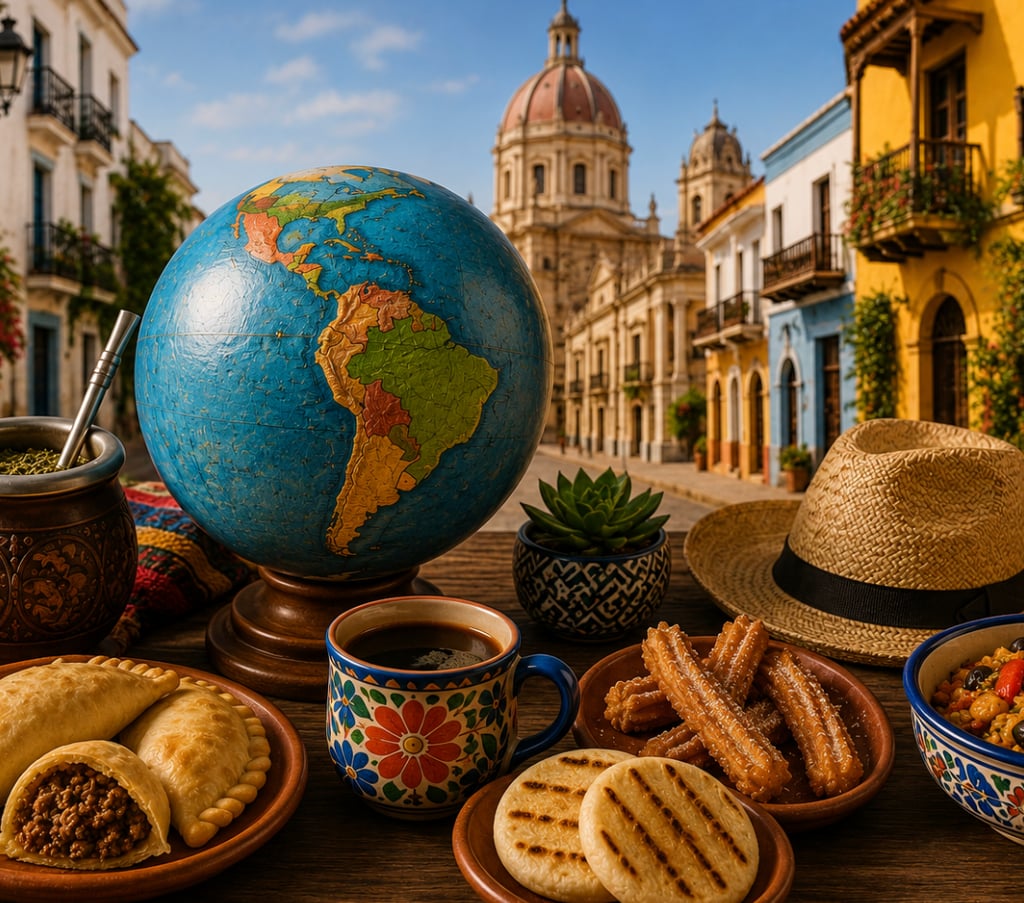
Words That Mean Completely Different Things Across Spanish-Speaking Countries
Spanish is one of the most widely spoken languages in the world, connecting millions of people across Spain, Latin America, and beyond. But while Spanish speakers share the same language, they don't always share the same vocabulary.
A word that sounds completely normal in Spain might mean something very different in Mexico. An everyday expression in Argentina could confuse someone from Colombia. And sometimes, using the wrong word in the wrong country can lead to a very funny—or slightly embarrassing—situation!
At Glossart Languages, we believe that discovering these regional differences is one of the most fascinating parts of learning Spanish. Let's explore some Spanish words that change meaning depending on where you are.
1. Coger
In Spain, coger is one of the most common verbs in everyday conversation. It means to take, catch, pick up, or grab.
Voy a coger el autobús.
I'm going to take the bus.
However, in several Latin American countries, particularly Argentina and Mexico, coger can have a vulgar sexual meaning.
Because of this, speakers in many Latin American countries prefer verbs such as tomar or agarrar.
So while coger el autobús sounds completely natural in Madrid, you may want to choose your words more carefully elsewhere!
2. Guagua
This is perhaps one of the best examples of how dramatically Spanish vocabulary can change from one region to another.
In the Canary Islands, Cuba, and Puerto Rico, guagua means bus.
Vamos a tomar la guagua.
We're going to take the bus.
But travel to Chile or some Andean regions, and guagua can mean baby.
La guagua está durmiendo.
The baby is sleeping.
So, depending on where you are, someone waiting for a guagua could be waiting for public transportation—or talking about a baby!
3. Torta
Are you ordering a cake or a sandwich? It depends on the country.
In Mexico, a torta is typically a sandwich made with a bread roll and filled with ingredients such as meat, cheese, avocado, or beans.
In other Spanish-speaking countries, torta can refer to a cake or another type of baked food.
This is why food vocabulary can be particularly tricky when traveling through the Spanish-speaking world. The same word on a menu may bring something completely different to your table.
4. Pisto
If you're in Spain, pisto is a delicious traditional dish made with vegetables such as tomatoes, peppers, zucchini, and onions.
But in some Central American countries, pisto is an informal word for money.
No tengo pisto.
I don't have any money.
Context is everything: are your friends discussing what to eat for dinner, or are they telling you they're broke?
5. Mono
Most Spanish learners first encounter mono as the word for monkey.
But the story doesn't end there.
In Spain, mono can also mean cute or pretty.
¡Qué vestido tan mono!
What a cute dress!
You might also hear the expression tener mono de algo, which refers to strongly craving or missing something you are accustomed to.
In other Spanish-speaking countries, mono can have additional regional meanings, proving once again that even simple words can have surprisingly complicated lives.
6. Camión
In Spain, a camión is a truck.
Simple enough until you arrive in Mexico.
In Mexico, camión is also commonly used to refer to a bus, particularly in everyday speech.
So if someone in Mexico says:
Voy a tomar el camión.
They are probably planning to take the bus, not jump into a truck!
7. Concha
The standard meaning of concha is shell, particularly a seashell.
In Mexico, concha is also the name of a famous and delicious sweet bread, recognizable by the shell-like pattern on top.
However, in countries such as Argentina and Uruguay, the same word can have a vulgar anatomical meaning.
This is definitely one of those Spanish words where knowing your audience—and your location—is important.
8. Chévere
If someone from Venezuela, Colombia, Cuba, or other parts of Latin America tells you that something is chévere, that's usually good news.
It means something like cool, great, or fantastic.
¡La fiesta estuvo chévere!
The party was great!
In Spain, the word is understood by many people but is not traditionally as common in local everyday speech. Instead, you're more likely to hear:
¡Qué guay!
Both expressions communicate a similar idea, but the vocabulary can reveal a lot about where the speaker comes from.
9. Pen: Bolígrafo, Lapicera, Pluma or Birome?
Sometimes the difference isn't in the meaning of a word but in how many different words exist for exactly the same object.
Take the simple pen.
Depending on the country, you might hear bolígrafo, lapicera, pluma, or birome.
A learner who has studied Spanish from Spain might confidently ask for a bolígrafo, while an Argentine speaker may naturally use birome or lapicera.
None of these words is inherently more "correct" than the others. They simply reflect the regional diversity of Spanish.
10. Why Does Spanish Vocabulary Change So Much?
Spanish is spoken across a vast geographical area, and every Spanish-speaking community has developed its own linguistic identity.
Over centuries, Spanish has been influenced by Indigenous languages, African languages, immigration, local history, and contact with other European languages. These influences have helped create the enormous variety of accents, expressions, slang, and vocabulary that exists today.
This is why there isn't just one way to "speak Spanish."
The Spanish you hear in Madrid is different from the Spanish spoken in Buenos Aires. Mexican Spanish has its own vocabulary and expressions, just as Colombian, Chilean, Cuban, Uruguayan, and Venezuelan Spanish have their own distinctive characteristics.
One Language, Many Cultures
Regional differences can occasionally cause misunderstandings, but they are also part of what makes Spanish such a rich and fascinating language.
For language learners, understanding these variations can make a huge difference. It helps you follow conversations with native speakers, understand movies and television series from different countries, enjoy music and social media, and communicate more naturally when traveling.
Most importantly, it teaches us that learning Spanish isn't simply about memorizing vocabulary from a textbook. It's about discovering the people, history, and cultures behind the language.
At Glossart Languages, we help students go beyond grammar and vocabulary to discover how languages are actually used in the real world.
Because when you learn a language, you're not just learning words—you're learning a whole new way to connect with the world.
#GlossartLanguages #LearnSpanish #SpanishLanguage #SpanishVocabulary #SpeakSpanish #SpanishLearning #SpanishWords #SpanishCulture #SpanishAroundTheWorld #SpanishForBeginners #LearnLanguages #LanguageLearning #Español #AprenderEspañol #VocabularioEspañol #SpanishTips #LanguageLovers #SpanishStudents