Transform Your World with Language Learning at Glossart Languages!




The Meaning Behind the Name “Europe”
The term “Europe” originates from ancient Greek and carries both mythological and linguistic significance. It is commonly linked to Europa, a figure from Greek mythology, as well as to the roots eurys (wide) and ops (face or view), suggesting the idea of a “broad horizon.” Over time, the word evolved from a mythological reference into a geographical and cultural concept used to describe one of the world’s continents. This overview explores the terminology behind “Europe” and how its meaning developed through history.
Evangelia Perifanou
4/18/20262 min read
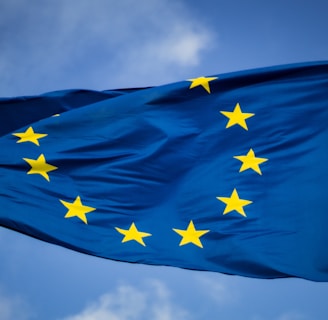
The Name “Europe”: More Than Just a Word
The name “Europe” comes from ancient Greek but like many words that have survived centuries, it carries more than one story.
It is not just a label on a map.
It is a name shaped by myth, language, and the way people once understood the world.
A Name Born from a Story
One of the most well-known explanations comes from Greek mythology.
According to the myth, Europa was a Phoenician princess. One day, the god Zeus saw her and became captivated. To approach her, he transformed himself into a white bull. Europa, drawn by the animal’s calm nature, climbed onto its back.
That was the moment everything changed.
Zeus carried her across the sea to Crete. Over time, her name Europa began to be used not just for a person, but for a land.
A name moved from myth into geography.
A Meaning Hidden in Language
Beyond mythology, there is also a linguistic explanation.
The word “Europe” may come from two ancient Greek elements:
eurys (εὐρύς), meaning wide
ops (ὤψ), meaning face or eye
Together, they suggest the idea of a “wide view” or “broad horizon.”
This interpretation feels almost symbolic.
To the ancient Greeks, Europe was not just a direction it was the land that stretched outward, the place where the known world expanded.
A Way of Dividing the World
In ancient times, Greek thinkers organized the world into three main parts:
Europe
Asia
Libya (what we now call Africa)
These divisions were not precise in the modern geographical sense. They were ways of understanding space, culture, and difference.
Europe, in this context, was simply one part of a larger story about how humans made sense of the world around them.
More Than Geography
What makes the name “Europe” interesting is not just where it comes from, but how it evolved.
It began as:
A mythological figure
Became a linguistic idea
And eventually turned into a geographical identity
Today, when we say “Europe,” we often think of politics, borders, or institutions.
But the name itself reminds us of something older.
A story.
A perspective.
A way of seeing the world as something wide, open, and still unfolding.
At Glossart Languages, every word has a story and we help you discover it.
#GlossartLanguages #LanguageLearning #Etymology #LearnLanguages #LanguageAndCulture #HistoryOfWords #DidYouKnow #Linguistics #GreekLanguage #Mythology #EuropeanCulture #WordOrigins #PolyglotLife #LanguageFacts #LearnSomethingNew