Transform Your World with Language Learning at Glossart Languages!





10 Italian Expressions You Can't Translate Literally | Glossart Languages
Discover 10 authentic Italian expressions that don't translate literally. Learn their meanings, cultural origins, and start speaking Italian more naturally with Glossart Languages.
Evangelia Perifanou
7/24/20264 min read
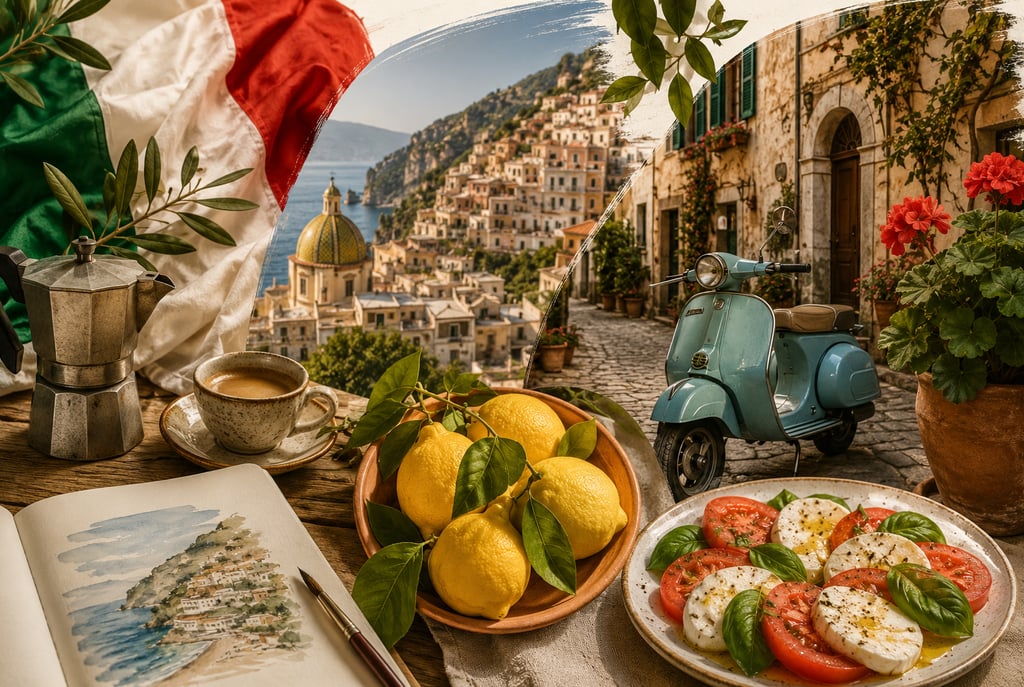
10 Italian Expressions You Can't Translate Literally
Why Idioms Are the Secret to Sounding Like a Native Speaker
What if becoming fluent in Italian wasn't just about learning words, but about understanding the expressions that bring the language to life? While textbooks teach grammar and vocabulary, everyday conversations are filled with idioms that reveal Italian humor, history, and culture. Learning these expressions allows you to go beyond literal translations and start thinking like a native speaker. After all, fluency isn't only about speaking correctly , it's about understanding what people really mean.
Why Are Idioms So Important?
Every language has expressions whose meanings cannot be understood by translating each word individually. These idioms reflect centuries of history, traditions, and cultural values. In Italy, they add warmth, personality, and emotion to conversations.
For language learners, mastering idiomatic expressions offers several benefits:
You understand native speakers more easily.
You sound more natural and confident.
You gain insight into Italian culture and everyday life.
You improve your listening skills when watching films, TV series, or podcasts.
You communicate beyond textbook Italian.
Let's explore ten of the most common Italian expressions you'll hear in daily life.
1. In bocca al lupo!
Literal translation: In the wolf's mouth.
Real meaning: Good luck!
Perhaps the most famous Italian expression, In bocca al lupo! is used before exams, interviews, competitions, or any important event. Rather than wishing someone "good luck," Italians metaphorically send them into the wolf's mouth, trusting they will emerge safely.
Traditionally, the reply is:
Crepi il lupo! (May the wolf die!)
Although today many people simply answer:
Grazie!
Example:
— Domani ho un esame molto difficile.
— In bocca al lupo!
2. Essere al verde
Literal translation: To be at the green.
Real meaning: To be broke.
If your wallet is empty after a holiday or a shopping spree, you're al verde. The exact origin is debated, but historians believe it may refer to old candles that burned down to a green-colored base when no money remained.
Example:
Dopo le vacanze sono completamente al verde.
3. Avere le mani bucate
Literal translation: To have holes in your hands.
Real meaning: To spend money too easily.
Imagine trying to hold coins with hands full of holes they would immediately fall through. That's exactly how Italians describe someone who cannot save money.
Example:
Marco compra sempre vestiti nuovi.
Ha davvero le mani bucate!
4. Prendere due piccioni con una fava
Literal translation: To catch two pigeons with one bean.
Real meaning: To kill two birds with one stone.
This expression refers to accomplishing two goals with one action.
Example:
Studio italiano mentre viaggio.
Così prendo due piccioni con una fava.
5. Piantare in asso
Literal translation: To plant someone in ace.
Real meaning: To abandon someone or stand them up.
Whether someone doesn't show up for dinner or suddenly leaves without explanation, Italians say they have been piantati in asso.
Example:
Mi ha piantato in asso davanti al ristorante.
6. Fare il furbo
Literal translation: To act clever.
Real meaning: To be sneaky or try to outsmart others.
This expression isn't a compliment. It describes someone who tries to gain an unfair advantage by being too clever.
Example:
Non fare il furbo!
7. Non avere peli sulla lingua
Literal translation: Not to have hair on your tongue.
Real meaning: To speak honestly and directly.
People who non hanno peli sulla lingua don't hide their opinions. They say exactly what they think, whether others like it or not.
Example:
Giulia dice sempre quello che pensa.
Non ha peli sulla lingua.
8. Avere la testa tra le nuvole
Literal translation: To have your head among the clouds.
Real meaning: To daydream or be absent-minded.
This expression describes someone whose mind is somewhere else.
Example:
Oggi hai la testa tra le nuvole!
9. Acqua in bocca!
Literal translation: Water in your mouth.
Real meaning: Keep it a secret!
If someone tells you confidential information, they might finish by saying Acqua in bocca!meaning don't tell anyone.
Example:
Ti dico una sorpresa...
Acqua in bocca!
10. Chi dorme non piglia pesci
Literal translation: Who sleeps doesn't catch fish.
Real meaning: Success comes to those who take action.
Just as fishermen must wake up early to catch fish, opportunities belong to those who are proactive.
It's similar to the English saying:
"The early bird catches the worm."
Example:
Se vuoi quel lavoro, candidati oggi.
Chi dorme non piglia pesci!
More Than Words: Understanding Italian Culture
Idioms are one of the richest parts of any language because they reveal how people interpret the world. Italian expressions often draw inspiration from animals, food, family life, work, and centuries of tradition. Learning them helps you understand not only what Italians say, but why they say it.
Research in linguistics and cognitive science suggests that language is deeply connected to culture and social interaction. When learners understand figurative language, they also develop stronger intercultural competence, making communication more meaningful and authentic.
Instead of translating every sentence word for word, you begin to recognize patterns of thought, humor, and emotion that are uniquely Italian.
Learn Italian the Way Native Speakers Actually Speak
At Glossart Languages, we believe that true fluency comes from understanding how language is used in real life. That's why our lessons go beyond grammar books to include authentic conversations, cultural insights, idiomatic expressions, and practical communication.
Whether you're learning Italian for travel, work, university, or personal enrichment, mastering everyday expressions will help you speak with greater confidence and connect more naturally with native speakers.
Language is more than vocabulary , it's culture, identity, and human connection. Every idiom you learn is another step toward thinking in Italian, not just translating it.
If you're ready to transform the way you learn languages, we're here to guide you every step of the way.
#GlossartLanguages #LearnItalian #ItalianLanguage #ItalianExpressions #ItalianIdioms #SpeakItalian #ItalianCulture #LanguageLearning #LearnLanguages #StudyItalian#ItalianVocabulary #ItalianGrammar #ItalianForBeginners #ItalianTeacher #OnlineItalian #LanguageTips #Polyglot #FluentItalian #TravelItalian #EverydayItalian #LanguageEducation #LanguageBlog #ForeignLanguages #LanguageLovers #StudyAbroad #CulturalLearning #Linguistics #LanguageJourney #LearnWithGlossart #SpeakLikeANative